


Amy Coney Barrett’s majority opinion today as to the permissibility of States counting ballots that are received after Election Day is perfectly reasonable, and well-reasoned. The issue before the Court was a relatively narrow one: whether Mississippi state law, which permits counting ballots “postmarked by Election Day, but received up to five days later” is in violation of federal election law.
Justice Barrett finds to the contrary — that Mississippi may lawfully count ballots postmarked by Election Day, but received up to five days later. Her ruling in no way precludes the Mississippi state legislature, or any other state legislature, from modifying state election laws to prohibit the counting of ballots received after Election Day. About two thirds of states already maintain this prohibition, and require that that only ballots received by the statutorily-designated Election Day deadline be counted. Another third of states allow for ballots postmarked by Election Day, but received after, to be counted, within a certain window of time that varies by state. The laws around this are constantly in flux; North Dakota previously allowed ballots received after Election Day to be counted, but amended its law in 2025, and the counting of ballots received after Election Day is now barred.
Barrett’s argument today is thoroughly sensible, both from the standpoint of statutory interpretation and historical precedent. Notably, she points to numerous states enacting laws during World War I that permitted the counting of soldiers’ overseas ballots received after Election Day. Addressing the Dissent’s citation of a Montana Supreme Court decision from 1944, which “held unlawful a new Montana statute that allowed soldier ballots to be received after Election Day,” Barrett notes that this decision “turned on existing state law, which the new law did ‘not . . . amend or repeal,’” and which had required that all ballots be “delivered to the election officials and deposited in the ballot box before the closing of the polls on Election Day.” This, Barrett convincingly explains, in fact gives additional credence to the idea that states may regulate elections so as to either allow or disallow the counting of ballots received after Election Day. During the 1940s, she observes, at least seven more states “authorized the receipt of ballots after Election Day, reflecting the belief that they were free to do so.” She also notes that “today, roughly 30 States count at least some absentee ballots mailed by Election Day but received afterward.” It would be strange if a majority of states have been violating federal election law for decades, and Congress simply chose to do nothing about it.
Ironically, Barrett and the Majority have strengthened the principle of permitting States to regulate the manner in which elections are conducted, while the Dissent endorses greater Federal intervention in States’ election-regulating procedures. Which is the opposite of where one would generally expect the more left-wing Justices to land on this sort of thing, even though they incidentally side with Barrett, since they are otherwise disposed to tolerate a more expansive federal role in overriding states’ sovereignty to administer elections — typically for liberally-oriented reasons such as the enforcement of civil rights, or preserving majority-minority representation. Likewise, the more right-wing justices would generally be non-disposed to tolerate the over-federalization of state election protocols, even though that’s functionally what they’re advocating in the Dissent. There’s a good argument to be made that Amy Coney Barrett is the only Justice on the Court exhibiting philosophical consistency here.
Of course, 99% of the people mad about this decision don’t actually care about the underlying judicial reasoning. They’re mad because they perceive a partisan disadvantage to Republicans when States are permitted to count votes received after Election Day, and they yearn for the Court to rule in such a manner that bolsters Republicans’ partisan advantage.
Even though it’s far from clear in practice that any potential partisan advantage or disadvantage shakes out in the simplistic way they imagine it does. They are probably just thinking about California, which does have a notoriously shambolic system of Election Administration, and broadening out their California-focused grievances to the entire country — even though this case is about… Mississippi.
And even though it’s far from obvious that Mississippi, Texas, West Virginia, and Alaska currently maintain laws permitting ballots received after Election Day to be counted because those states’ legislatures secretly want to advantage... Democrats? Or that Colorado, Minnesota, Hawaii, and Connecticut prohibit counting ballots received after Election Day because those states’ legislatures secretly want to advantage... Republicans? See map below:
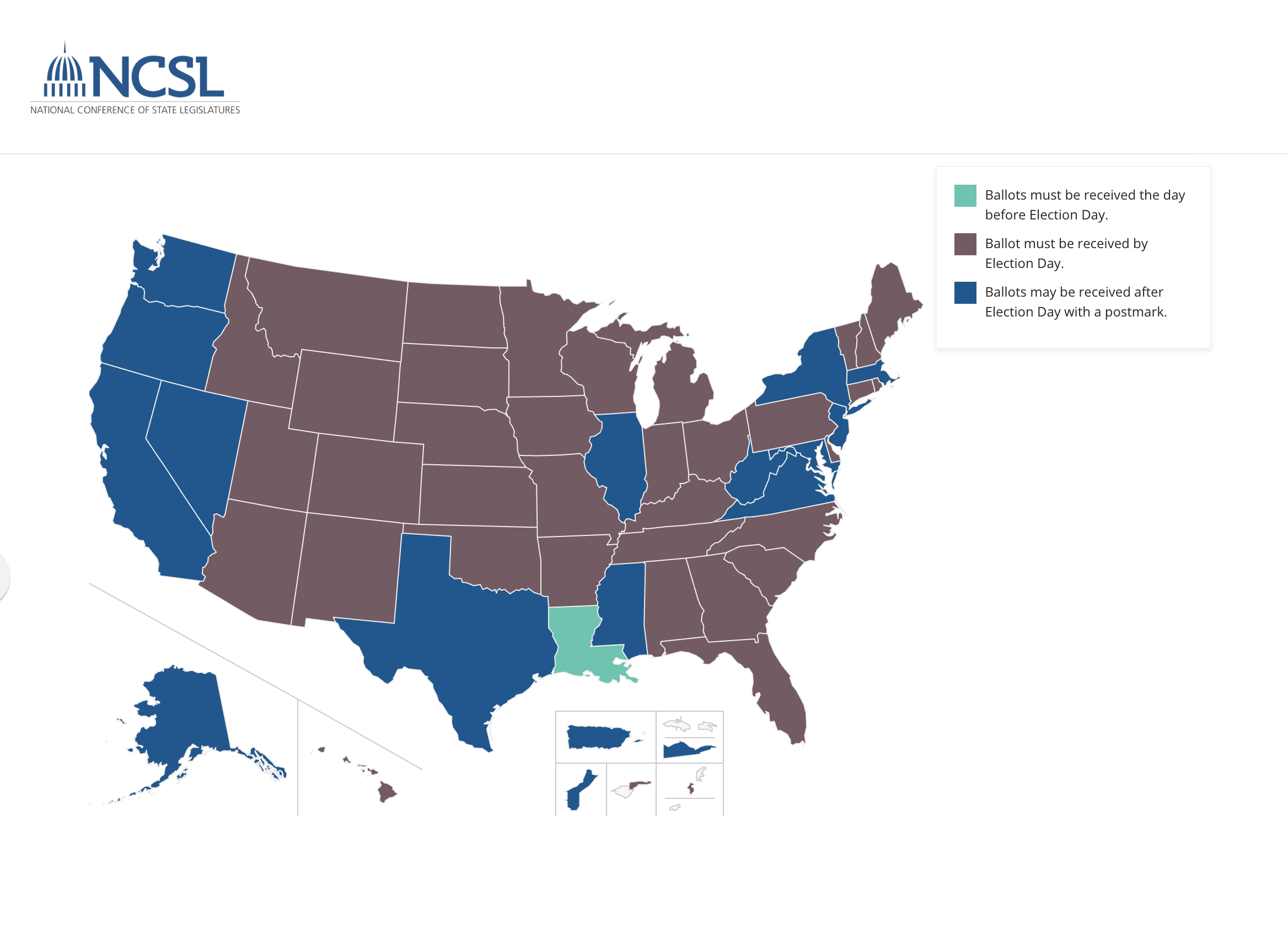
Trump and other GOP windbags grousing about this latest “betrayal” by Barrett fundamentally just want her to do what they perceive to be the GOP’s partisan bidding — even though, again, it’s wholly unclear that they are even substantively correct about the partisan advantage/disadvantage they’ve assumed must inherently flow from laws governing when ballots may be counted. California is definitely the most notorious for its painful slowness in counting and reporting votes, joined by a few others like Nevada, which do permit counting ballots received after Election Day. Arizona is also definitely on that list, however, and it prohibits counting ballots received after Election Day. Which suggests the key variable as to the efficiency or inefficiency of election administration may not be, in every respect, whether a state permits the counting of ballots received after Election Day. But whatever — who wants to think too hard about it, when you can just launch reflexively into partisan crybaby mode, as usual, and comfortably circumvent any burdensome need to independently reason about stuff.
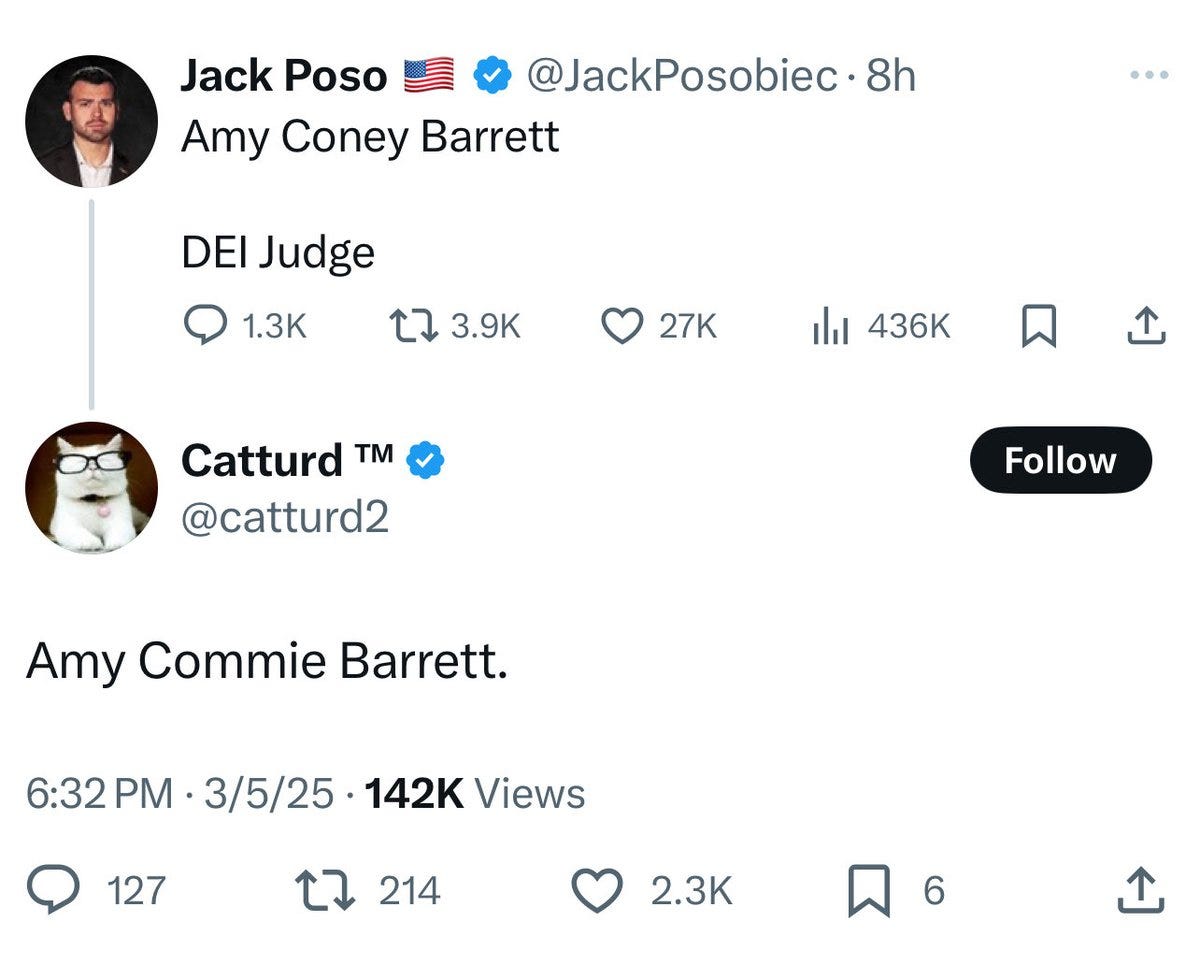
When she was first nominated to the Supreme Court before the 2020 election, armies of Shrieking Libs warned us that Amy Coney Barrett was going to be a mindless Trump/GOP stooge. She has since consistently demonstrated that she is nothing of the sort, even though that’s exactly what the Trump/GOP cheerleaders desperately want her to be:
In fact, Barrett demonstrated she was no airhead Trump lackey within just a month or two of taking her seat, when she joined every other Justice in rejecting the cockamamie theories Trump and various Republican state Attorneys General were advancing at the time to effectively negate the 2020 election. Numerous other rulings have since followed where she directly contravenes the personal interests of Trump, even as her record is still straightforwardly “conservative” by any recognizable metric, having provided the decisive 5-4 vote on landmark cases such as overturning Roe v. Wade, etc.
And even in this case, Barrett makes clear that her ruling does not bear on larger partisan initiatives that might still be undertaken to nakedly enhance Republican electoral power — such as the scope of Congress’s ability to regulate elections, which Trump is constantly hyperventilating about with his daily demands to pass the “SAVE America Act.” Nor, Barrett clarifies, does today’s ruling bear on the overall practice of mail/absentee voting, the potential regulation/curtailment thereof, or a host of other contested issues related to the Constitutionality of election administration. Rather, her ruling is narrowly tailored to whether current federal law pre-empts current Mississippi state law. Barrett finds that it doesn’t, for perfectly explicable and sensible reasons. But in certain quarters, where shrill partisan screeching rules the day, this makes her a vicious traitor!
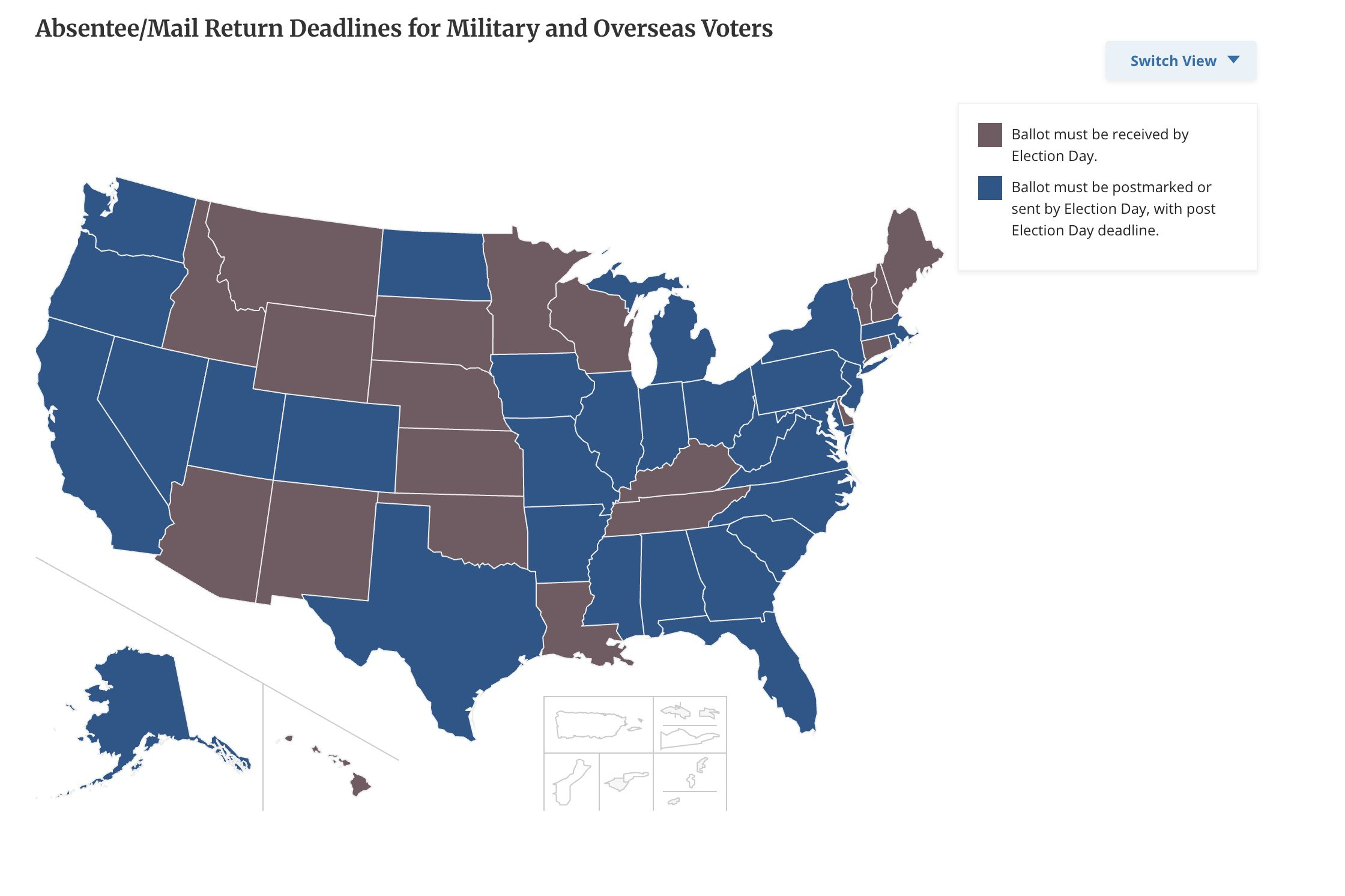
QUICK UPDATE: Notably, the dissenting justices in this case endorsed what would essentially amount to a nationwide upheaval in election law. Samuel Alito’s logic is that federal law requires all ballots to be “received” with finality by election officials on Election Day itself. This would necessarily invalidate laws in the majority of states, including notorious left-wing hotbeds such as Arkansas, South Carolina, and Utah, that permit military and overseas ballots to be counted, even if received at some point after Election Day.
The most sober and rational piece I've ever read from you.
Hardly any fun at all!
Roberts is a very savvy political operator and he works hard to make the court appear unbiased. The birthright citizenship decision is about to come down and it looks like it could easily go Trump's way. If the court appears to be partisan towards Trump, the Democrats will scream even louder to pack the court.